
Subscription traps: what the UK's new rules ask of your sign-up page
A subscription trap is a contract that’s easy to start and hard to leave: a free trial that turns into a monthly charge nobody remembers, or a cancel route that ends at a phone line. The UK’s new subscription rules, under the Digital Markets, Competition and Consumers Act (DMCCA), apply to contracts entered into from 1 January 2027, if Parliament approves the draft regulations laid on 19 October. They ask for four things: the key terms up front, before the order button; reminders before renewals and before a trial ends; an online way out for anyone who signed up online; and two 14-day cooling-off periods. The CMA enforces them.
If you’re the customer, that’s the short version. The rest is for the business on the other side of the button: what’s settled and what’s still a draft, what each rule asks of your sign-up page, renewal emails and cancel route, how refunds work, and a phone check for your own flow.
What counts as a subscription trap
The government’s announcement in August put numbers on it. There are around 155 million active subscriptions in the UK, and people spend an estimated £1.6 billion a year on ones they don’t want. Citizens Advice, quoted in the same release, found that over 13 million people, 26% of UK adults, had taken out a subscription by accident in a single year.
The law’s word is subscription contract, and the guidance defines one in four parts: a contract between a trader and a consumer, for goods, services or digital content, paid for, that renews and charges automatically unless the consumer acts to stop it. Free and cheap trials that roll onto a full price count. So do contracts made online, on the phone, in a shop or on the doorstep.
So a coffee box, an app, a streaming plan or a gym is in. Business-to-business contracts are out. If you’re outside the UK and sell to UK consumers, the guidance says plainly that you have to comply.
Some contracts are left out: cultural and heritage charity memberships, utilities, financial products, prescriptions (contact lenses and glasses are still in), phone and broadband regulated by Ofcom, renting a home, micro-businesses delivering household groceries like a local milkman, package travel, timeshares, childcare and gambling.
The dark patterns examples post covers four subscription patterns with the cases behind them, the roach motel among them.
DMCCA subscription contracts: the law and the dates
The duties are in Part 4, Chapter 2 of the DMCC Act 2024, which got Royal Assent in May 2024. That chapter isn’t in force yet: legislation.gov.uk marks sections like section 260 “Prospective”. The detail on refunds, notices and exclusions is in the draft Consumer Subscription Contracts (Cancellation and Information) Regulations 2026.
The start date has moved once. In April 2026 the government’s consultation response said we anticipate that the regime will commence in spring 2027
. On 9 August the Prime Minister’s Office brought it forward: New rules will now come into force in January 2027
. The Prime Minister, Andy Burnham, put it this way: We’re also making it as easy to leave a subscription as it is to join.
| Date | What happened |
|---|---|
| May 2024 | The DMCC Act gets Royal Assent; the subscription chapter waits |
| 2 April 2026 | Government response expects a spring 2027 start |
| 9 August 2026 | Prime Minister’s Office announces January 2027 |
| 19 October 2026 | Draft regulations laid before both Houses; draft guidance published |
| 1 January 2027 | Start date in regulation 1 of the draft, for contracts entered into from then |
The draft is laid under the affirmative procedure, so each House has to approve it by resolution. As I write, Parliament’s record shows the approval motion tabled in the Commons and no vote yet, and the guidance’s cover says The final guidance will be issued once the Regulations are made.
So read every rule below as what the draft says.
The rules aren’t retrospective. A contract signed in 2026 stays under today’s law, mainly the Consumer Contracts Regulations 2013, even when it renews in 2027. The guidance adds a nudge anyway: we consider best practice would be for consumers to receive consistent protections, regardless of when they take out their contract
.
Before the order button: the key terms up front
The rules follow a subscriber from the sign-up page to the way out. There are four stops, in order.
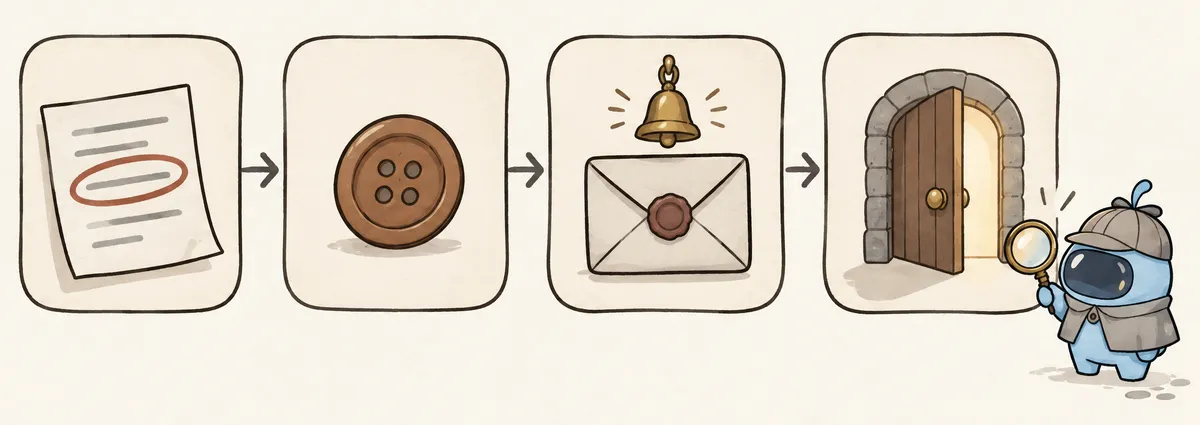
First, the key pre-contract information, a short set summarised in the guidance’s Annex A. It goes as close as possible before the consumer commits, all together and set apart from everything else on the screen. The guidance’s own summary is that the key pre-contract information should be provided first, prominently and separately from the full pre-contract information
.
What goes in the set:
- That the contract carries on, and keeps charging, until they end it
- Any minimum period before they can leave
- For a trial: when the first full charge comes and how much it is
- How often they pay and the minimum each time, plus a monthly figure if payments aren’t monthly (£120 a year is £10 a month)
- The minimum total they’re signing up for: £30 on a rolling £30 monthly plan, £180 if there’s a six-month tie-in
- Any term that lets you change the price
- How to end it, any notice period, and when you’ll send reminders
- A summary of the cooling-off rights
Online, this set has to be readable during the purchase without clicking anything; the guidance’s FAQ says a link isn’t enough. The longer full pre-contract information, with your trading name, address, complaints policy and the rest, can sit behind a prominent, clearly labelled link, or inside your terms if it’s kept together. After sign-up you send it in writing, by email for instance, before supply starts. If you run a trial, both sets cover the trial and what it turns into.
Delivery restrictions and accepted payment methods have to be visible during the purchase too. And the last step has to make clear the customer is agreeing to pay. The guidance’s example is a clearly labelled order, buy or subscribe button, and it says what happens without one: If the trader does not do this, the consumer is not bound by the contract.
That comes straight from section 257 of the Act.
Automatic subscription renewal law in the UK: reminder notices
Next comes the reminder. The guidance sets out three moments when one is due:
- Roughly once every six months on a rolling weekly or monthly plan
- Before a contract renews for 12 months or longer, plus an extra, earlier reminder
- Before a free or discounted period ends
Its example for a monthly plan: someone signs up on 1 June and pays on the first of each month. A reminder is due for the 1 December payment, then again for the next 1 June. For a trial, it comes before the first payment at the higher price.
You pick the timing and state it in the key terms (“X to Y days before you’re charged”). It has to leave people real time to decide and act.
It goes on a durable medium: an email, a letter, a text, something the customer can keep and find again. The guidance rules out pop-up or push notifications which are not retrievable
. Its purpose has to be obvious, and the guidance suggests a subject line that says it’s about an upcoming payment. The required details have to be more prominent than anything else in the message, and putting them first helps.
Annex C lists those details: that it renews unless they end it, the amount and date, the previous amount and any increase, the minimum total, the next payment date or the end date, and how to stop it, with a link and the last day to act.
The way out: online exit and the cancel button
Then the exit. Under section 260, a customer can end the contract at any time, in a way that’s straightforward, with no steps that aren’t reasonably necessary. The guidance sets the bar: The policy intention of the legislation is that exiting should be as easy as signing up.
It says that’s more likely when leaving is quick and the customer doesn’t have to contact you more than once.
If people can sign up online, they have to be able to leave online, and the instructions have to be where someone looking for them would look. The guidance gives three examples: a clearly labelled button on a website or in an app
, a button in the customer’s account, or a simple web form. Accounts aren’t required. One thing it rules out: We do not consider that offering an email address meets the criteria for a straightforward online exit route.
A customer can still end the contract by sending you a clear statement, by email or any other way, and that counts. It just can’t be your only route. Of everything in the guidance, I think that line will change the most cancel pages.
Retention offers and surveys are allowed, within limits. Asking for account details is likely fine; a compulsory feedback form before someone can leave is unlikely to pass. As for offers, the guidance says they should not prolong the exit process or discourage the consumer from seeing it through
.
What about a chatbot or an AI assistant? The guidance’s FAQ asks exactly that, and answers neither yes nor no: There is no single prescribed form for an online exit route but arrangements must meet the requirements.
So a bot can be the route if it ends the contract online, simply and without detours. One that asks why three times before it lets go would be hard to square with that.
Once someone has left, you confirm it in writing with the date the contract ends: within 24 hours if they left online, within three working days otherwise. Marketing can go in that message, as long as the end date stays the most prominent thing in it.
14-day cooling-off periods and refunds
Last, two cooling-off periods of 14 days each, when customers can cancel without a reason or a penalty.
| Period | When it runs | What you give |
|---|---|---|
| Initial | 14 days from sign-up; for goods, 14 days after the first delivery arrives in full | The cooling-off rights, in the key and full terms |
| Renewal | 14 days after a trial or discount converts, or after a renewal onto 12 months or more | A cooling-off notice, sent on its own |
In the guidance’s example, a contract starts on 1 January, the first box arrives on 10 January, and the 14-day cooling off period ends on 24 January. If you never tell people about the initial cooling-off right, it keeps running, for up to 12 months. The renewal notice has to go separately from anything else: no promotions in it, and you can’t fold it into a reminder.
Subscription refund law in the UK, under these rules, depends on what was supplied before the customer cancelled:
- For services, the customer pays for what they used. The guidance’s example is a £365 annual membership cancelled on day 4, which leaves £4 to pay.
- Returnable goods come back at the customer’s cost unless you agreed otherwise, and you refund within 14 days of getting them back or seeing proof they were sent.
- With perishable or personalised goods, you can keep the price of what was delivered. A £48 monthly flower plan with weekly deliveries, cancelled on day 10 after one delivery, means a £36 refund.
- On a digital-content-only plan, the customer can give up the initial cooling-off right to start straight away, with their express consent and your written confirmation. Without both, a customer who cancels in the first 14 days pays nothing for the content.
You can only charge for what was used if you gave the cooling-off information properly and, for services, the customer asked for the service to start.
There’s a second refund route that doesn’t depend on timing. If you skip the key terms, miss a required reminder, set an unreasonable reminder period or make leaving hard, the customer can cancel for that breach, within 12 months, and is presumed not to owe the payments taken from that point on. Refunds are due within 14 days.
How the subscription traps rules are enforced
Customers can take their rights to court. Public enforcement runs two ways. Through the courts, the CMA, Trading Standards and sector regulators can ask for orders, and the court can impose penalties. Or the CMA acts directly: it investigates, issues infringement notices, accepts undertakings and imposes penalties up to £300,000 or 10% of global turnover, whichever is greater.
The CMA already uses those powers on other parts of the Act. This week’s CMA fines piece covers its first fines on website practices, and drip pricing covers the pricing rules. I didn’t find a CMA statement on how it will treat subscriptions in the first months, so I won’t guess at a grace period. If your plan sits near one of the exclusions, or inside a bundle, that’s a question for a lawyer before January.
Selling in the US as well? The FTC’s click-to-cancel rule was vacated by the Eighth Circuit on 8 July 2025, so US auto renewal law is the federal ROSCA plus the states. California, for one, says people who signed up online must be able to cancel exclusively online. The click to cancel page covers it, and for EU customers there’s the withdrawal button page.
Check your own sign-up flow
- Open your site in a private window on your phone and start a sign-up as a new customer. Screenshot every screen.
- On the screen with the pay button, without opening a link, find the price, how often it’s charged, when a trial ends and what it costs after, the minimum total, how to leave, when you’ll send reminders, delivery limits and payment methods. Anything missing goes on your list.
- Read the button. Does it say the customer is about to pay, like subscribe or buy? “Continue” doesn’t tell anyone that.
- Finish the sign-up with a test account. Look for the email with the full terms in it.
- Open your renewal reminder template. If it looks like the email in my margin note, move the amount and the date to the top and rewrite the subject line so it says a payment is coming.
- Now leave. Start from the home page, logged out. Count the taps to the cancel button and write down any step that isn’t needed: a compulsory survey, a phone number, an email address as the only route.
- Check the confirmation arrives within 24 hours and states the end date.
Peeky reads public pages, so steps 4, 5 and 7 are yours. For the rest, UK-14 looks at the timers, counters and pricing steps that push people harder than they should, subscription traps among them. EU-13 reads whether the renewal terms are clear before purchase and whether cancelling is easy to find, and US-09 does the same against US law. They’re the ones a subscription page runs into, out of the more than ten checks Peeky reads for each jurisdiction.
Questions people ask
What is a subscription trap?
It's a subscription that's easy to start and hard to leave: a free trial that rolls onto a full price nobody noticed, a renewal with no warning, or a cancel route that ends at a phone line. The UK government says people spend an estimated £1.6 billion a year on subscriptions they don't want. The law calls them subscription contracts, not traps.
What are the new UK rules on subscription traps?
Under Part 4, Chapter 2 of the DMCC Act and draft regulations, a business must show the key terms before the order button, send reminders before trials end and before renewals, let people who signed up online leave online, and respect two 14-day cooling-off periods. The draft guidance explains each duty. The CMA can enforce them directly.
When do the UK subscription rules start?
The draft regulations set 1 January 2027, and the rules apply to contracts entered into from that date. They were laid before Parliament on 19 October 2026 and need approval by both Houses first. They aren't retrospective: a contract signed before January stays under the current rules, even when it renews in 2027.
Is there a 14-day cooling-off period for subscriptions?
There will be two. The initial one runs 14 days from sign-up, or for goods 14 days after the first delivery arrives. The renewal one runs 14 days after a trial or discount converts to the full price, or after a renewal onto 12 months or more. The customer can cancel in either without a reason, per the draft guidance.
Can I get a refund if a subscription renewed without warning?
For contracts made from 1 January 2027, if a reminder was required and never sent, the draft guidance says you can cancel for that breach within 12 months, and you're presumed not to owe the payments taken from that renewal on. Refunds are due within 14 days. Older contracts fall under today's consumer law, so ask the business first.
Filed with
In the Casebook
In the Handbook
References
- Draft Consumer Subscription Contracts (Cancellation and Information) Regulations 2026
- Department for Business and Trade: Subscription contracts rules, draft guidance
- Digital Markets, Competition and Consumers Act 2024, section 260
- UK Parliament: Consumer Subscription Contracts (Cancellation and Information) Regulations 2026, timeline
- Prime Minister's Office: PM starts roll out of 'everyday fixes' on the cost of living